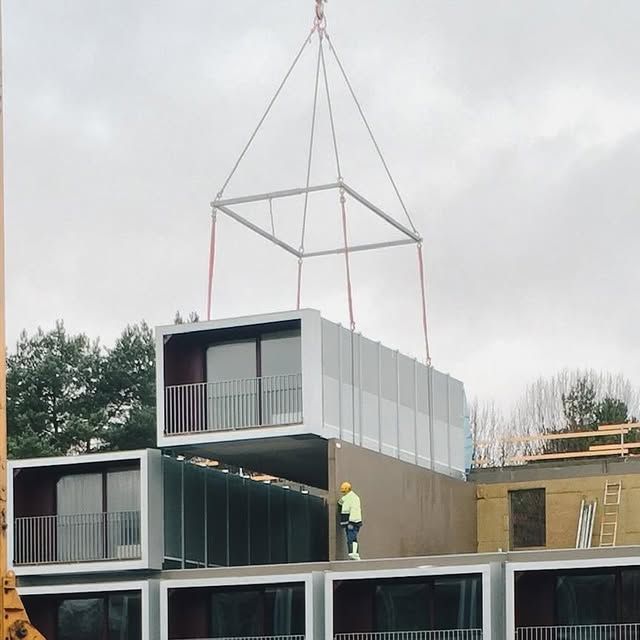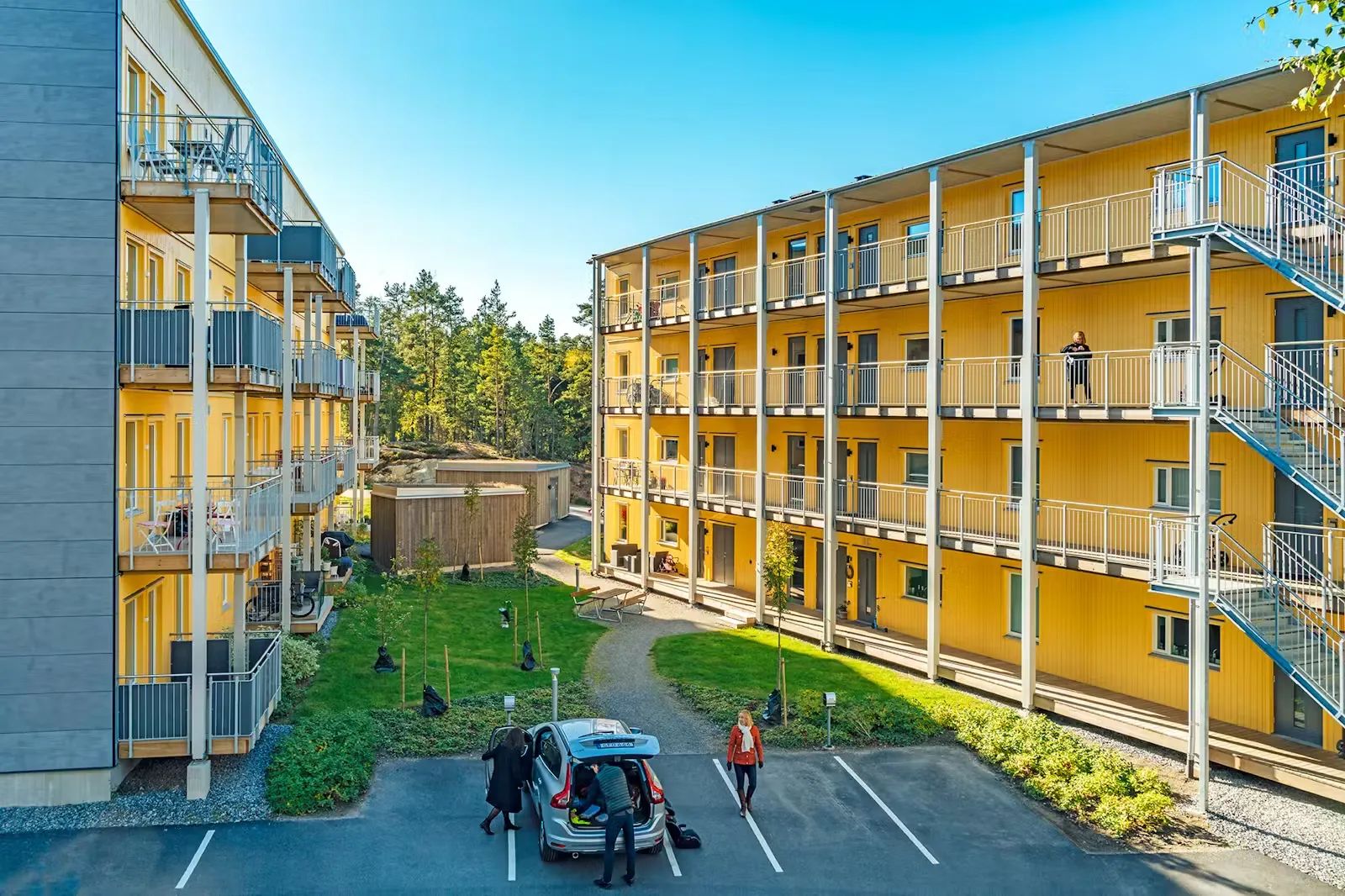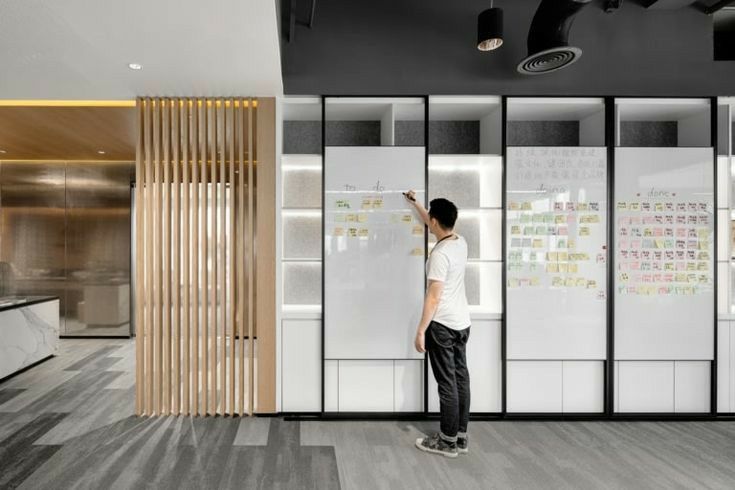
Modular construction is often discussed in terms of speed, efficiency, and quality control. While these advantages are real, they do not come from the manufacturing process alone. At its core, modular construction succeeds or fails based on one critical factor: collaboration.
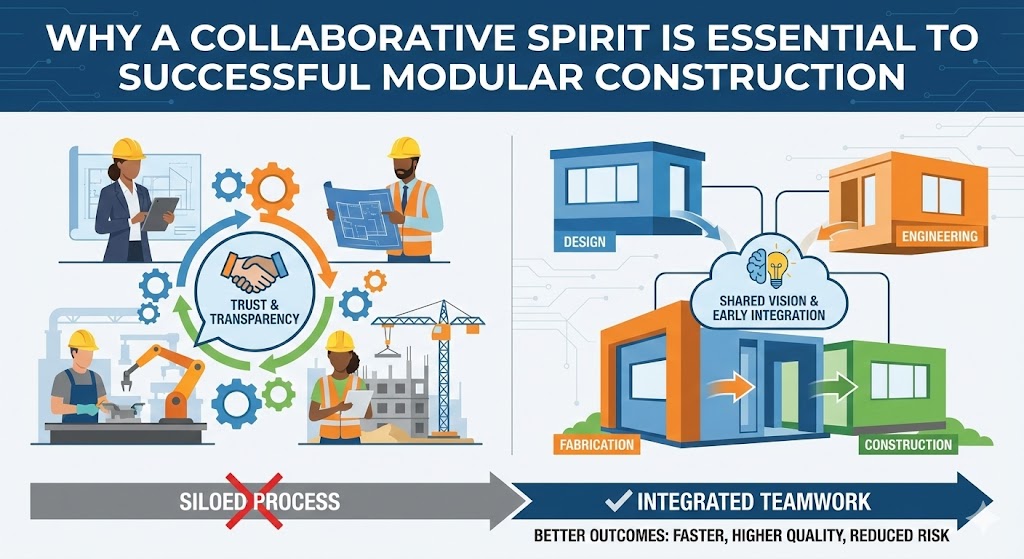
Unlike conventional construction, where design, engineering, fabrication, and construction often happen in silos, modular construction demands a truly integrated approach. Every decision made early in the process carries downstream consequences. This reality makes a collaborative spirit not just beneficial, but essential.
Modular Construction Is a Team Sport
In modular projects, architects, engineers, fabricators, and contractors must work hand-in-hand from the earliest stages of design. Structural systems, MEP routing, transportation constraints, lifting strategies, tolerances, and sequencing all need to be considered simultaneously.
When these disciplines operate independently, conflicts emerge late, often when changes are costly or impossible. Conversely, when teams collaborate early and continuously, challenges are resolved before they become problems, resulting in better outcomes for everyone involved.
Early Integration Drives Better Design Decisions
One of the defining characteristics of modular construction is that design decisions are effectively locked in much earlier than in traditional projects. This requires close coordination between designers and fabricators from day one.
Fabricator input on module dimensions, material availability, connection details, and production workflows can significantly improve constructability and cost certainty. Engineers can align structural and MEP systems with manufacturing realities. Clients gain a clearer understanding of what is feasible, what is flexible, and what is not.
This level of early integration allows the project team to design for manufacturing, not simply design and hope manufacturing can adapt later.
Transparency Builds Trust and Prevents Surprises
Transparency is a cornerstone of successful modular delivery. Open communication around constraints, risks, costs, and schedules creates alignment and reduces uncertainty.
When teams openly share information, whether it’s production timelines, tolerances, testing requirements, or logistical challenges, everyone can plan accordingly. This transparency minimizes surprises in the factory and on site, where changes are most disruptive.
Clients, in particular, benefit from this openness. Understanding the modular process, its dependencies, and its trade-offs builds confidence and fosters informed decision-making.
Collaboration Reduces Risk and Improves Quality
Modular construction shifts much of the work into controlled factory environments. While this improves quality and consistency, it also means that errors are replicated quickly if not identified early.
A collaborative culture encourages continuous review, coordination, and feedback across disciplines. Engineers, fabricators, and contractors can collectively identify risks, refine details, and ensure that quality standards are met before production ramps up.
The result is fewer defects, smoother installations, and a more predictable project outcome.
Building on Trust, Not Contracts Alone
While contracts define roles and responsibilities, trust is what enables teams to truly collaborate. Modular construction works best when partners view each other as contributors to a shared goal, not as separate entities protecting their own scope.
Trust allows teams to have honest conversations about limitations, propose alternatives, and adapt together when challenges arise. It transforms problem-solving from a reactive exercise into a proactive, collective effort.
A Shared Vision for Success
Ultimately, modular construction is not just about building modules, it’s about building relationships. Projects that embrace a collaborative spirit consistently deliver better results: tighter schedules, improved quality, reduced waste, and more satisfied clients.
By working transparently, integrating expertise early, and building trust across all disciplines, modular teams can unlock the full potential of this construction method. In an industry where complexity is growing and timelines are shrinking, collaboration is no longer optional.